







































































































































































Table of Contents
Toggle8 Evidence-Based Strategies for Sustainable Weight Loss
Author: RVLNSV PRASAD
Updated On: September 2026
About Us
Author Bio
Editorial Policy
Contact Us
Introduction
Losing weight can be difficult.
Keeping it off can be even harder.
That does not mean your body is “broken,” and it does not mean you simply need more willpower. Weight is influenced by food intake, physical activity, sleep, medications, medical conditions, genes, hormones, environment, stress, and many other factors. The National Institute of Diabetes and Digestive and Kidney Diseases (NIDDK) specifically recognizes this complexity when explaining the factors that affect body weight and health. NIDDK: Factors Affecting Weight and Health
The better goal is not to find a secret metabolism trick.
It is to build sustainable weight loss strategies that you can continue when motivation falls, schedules become busy, and progress slows.
Current CDC guidance describes healthy weight loss as a combination of healthy eating patterns, physical activity, adequate sleep, and stress management. It also notes that gradual, steady weight loss is more likely to be maintained than very rapid loss. CDC: Steps for Losing Weight
Recent research adds another important lesson: successful long-term weight management involves behavior change, self-monitoring, feedback, realistic goals, and strategies that can be maintained over time. A September 2026 systematic review and meta-analysis of 65 studies involving approximately 10,000 adults found that several behavior-change techniques—including goal setting, feedback, and self-monitoring—were associated with better long-term weight outcomes. 2026 systematic review and meta-analysis of weight-loss behavior-change techniques
This article takes a practical approach.
Instead of promising a faster metabolism or a miracle diet, it explains how to create a weight-loss system that respects appetite, muscle, sleep, movement, food quality, and long-term maintenance.
Quick Answer
The most sustainable approach to weight loss usually combines:
- A manageable energy deficit rather than extreme restriction.
- Protein– and fiber-rich foods that help meals remain satisfying.
- Resistance exercise to help preserve lean mass during weight loss.
- A dietary pattern you can realistically continue.
- Adequate sleep and a manageable stress routine.
- Regular physical activity beyond formal workouts.
- Self-monitoring and feedback without becoming obsessed with the scale.
- A weight-maintenance plan that begins before you reach your goal.
You do not need to use every diet strategy available.
Intermittent fasting, calorie counting, low-carbohydrate eating, and other approaches can work for some people, but the most useful plan is one that creates an appropriate energy deficit while remaining nutritionally adequate and sustainable.
NIDDK emphasizes that the key to losing weight is choosing a healthy eating plan that you can maintain over time, alongside regular physical activity. NIDDK: Eating and Physical Activity to Lose or Maintain Weight
Key Takeaways
- Sustainable weight loss is more than simply “eating less.”
- Metabolism changes as body weight changes, but that does not mean metabolism is permanently damaged by dieting.
- Protein can help support muscle retention during weight loss.
- Resistance exercise is particularly useful for preserving lean mass.
- Dietary quality matters, but no single diet is automatically best for everyone.
- Sleep can influence appetite, food intake, and weight-management behavior.
- Everyday movement matters alongside planned exercise.
- Self-monitoring can help identify patterns and setbacks.
- Weight-loss plateaus are normal and do not automatically mean your metabolism has stopped working.
- Weight maintenance should be planned before the diet ends.
- Some people may need professional treatment, medication, or other medical support for obesity; lifestyle strategies do not have to be the only treatment.
What Does Sustainable Weight Loss Actually Mean?
Sustainable weight loss means losing weight through a strategy that can realistically be maintained over time.
It does not mean trying to lose weight as quickly as possible. Nor does it require following the most restrictive diet you can tolerate.
A useful sustainable approach should provide enough nutrition, fit your lifestyle, and allow you to continue eating a reasonable variety of foods.
NIDDK notes that successful weight-management programs generally include a reduced-calorie eating plan, physical activity, ongoing support, and a strategy for keeping the weight off. NIDDK: Choosing a Safe and Successful Weight-Loss Program
This matters because weight loss and weight maintenance are two related but different challenges.
A plan that helps you lose 10 kg but leaves you exhausted, hungry, and unable to continue may not be a sustainable plan.
A Better Definition
Sustainable weight loss = an appropriate energy deficit + adequate nutrition + manageable habits + muscle preservation + long-term maintenance.
That is much more useful than the phrase “metabolic mastery.”
How Metabolism Really Affects Weight Management
Your metabolism is not a single switch.
It includes the many processes through which your body uses energy.
Energy is required for basic physiological functions, physical activity, digestion, and other processes.
Your total daily energy expenditure is influenced by factors such as:
- Body size
- Body composition
- Age
- Physical activity
- Food intake
- Genetics
- Hormonal and medical factors
- Environmental influences
NIDDK explains that body weight is influenced by lifestyle habits, sleep, medications, health conditions, family history, and genes, among other factors. NIDDK: Factors Affecting Weight and Health
Does Weight Loss Slow Metabolism?
Your energy requirements generally decline as you lose weight because a smaller body requires less energy to maintain and move.
NIDDK also notes that metabolism slows during weight loss and that hormonal and other changes can make maintaining weight loss difficult. NIDDK: Eating and Physical Activity to Lose or Maintain Weight
This does not mean that your metabolism is permanently damaged.
It means that the body adapts as circumstances change.
That is one reason a calorie intake that produced weight loss initially may eventually produce slower loss or weight stability.
The Practical Lesson
Do not respond to a plateau by immediately cutting food dramatically.
First examine:
- Portion sizes
- Snacks
- Drinks
- Weekend eating
- Activity levels
- Sleep
- Stress
- Changes in body weight
- Changes in your routine
Sometimes the problem is not that your metabolism has “stopped.”
Your energy needs and behavior may simply have changed.
1. Create a Manageable Energy Deficit
Weight loss requires an energy deficit over time.
That does not mean you need to starve yourself.
NIDDK explains that when energy intake from food and beverages consistently exceeds energy used through daily living and activity, the body can store some of the excess energy as fat. NIDDK: Factors Affecting Weight and Health
The challenge is creating a deficit that is large enough to support weight loss but realistic enough to maintain.
Why Extreme Restriction Often Becomes Difficult
Very restrictive plans can create:
- Hunger
- Food preoccupation
- Social difficulties
- Reduced enjoyment
- Fatigue
- Difficulty maintaining the diet
- Rebound eating
A 2025 systematic review of behavioral techniques used alongside low-calorie and very-low-calorie diets found that specific behavioral support techniques were associated with better weight-loss outcomes, highlighting that diet composition alone is not the whole story. 2025 systematic review of behavior-change techniques
A Simple Portion Strategy
Instead of immediately weighing everything you eat, start by examining the structure of meals.
A practical plate might contain:
| Meal component | Examples |
|---|---|
| Vegetables | Mixed vegetables, leafy greens, tomatoes, beans |
| Protein | Dal, chickpeas, eggs, fish, curd, tofu, paneer |
| High-fiber carbohydrate | Oats, whole-grain roti, brown rice, millet |
| Fruit | Whole fruit rather than juice |
| Fat | Nuts, seeds, or an appropriate amount of cooking oil |
WHO recommends dietary patterns containing foods such as vegetables, fruits, legumes, nuts, and whole grains while limiting excess sugars, salt, and unhealthy fats. WHO: Healthy Diet
The goal is not to make every plate perfect.
It is to make your normal food environment more supportive of your goal.
2. Prioritize Protein and Fiber for Better Satiety
One reason diets become difficult is hunger.
A meal that leaves you hungry again shortly afterward can make long-term adherence difficult.
Protein is particularly important during weight loss because preserving lean mass matters.
A 2024 systematic review and meta-analysis of 47 studies involving 3,218 adults with higher weight or obesity found that higher protein intake during weight loss was associated with better preservation of muscle mass, although effects on strength and physical function were not statistically significant. Systematic review of protein intake and muscle preservation
A 2025 meta-analysis also found that higher-protein dietary regimens were associated with reductions in body mass, BMI, and fat mass and a modest increase in lean body mass compared with normal-protein diets, although dietary patterns and study designs varied. 2025 systematic review of high-protein diets
Protein Does Not Mean “Eat as Much as Possible”
More protein is not automatically better.
Your requirements depend on body size, age, activity, health status, and other factors.
Useful protein foods include:
- Dal
- Chickpeas
- Rajma
- Eggs
- Fish
- Yogurt
- Milk
- Tofu
- Soy foods
- Paneer
- Nuts and seeds
If you have kidney disease or another medical condition that affects protein requirements, obtain individualized advice rather than following a generic high-protein plan.
Don’t Forget Fiber
Fiber-rich foods can increase meal volume and contribute to satiety.
Useful options include:
- Vegetables
- Fruits
- Lentils
- Beans
- Chickpeas
- Oats
- Whole grains
- Nuts
- Seeds
This also improves the overall nutritional quality of the diet.
3. Preserve Muscle With Resistance Training
This is one of the most important additions to a modern sustainable weight-loss article.
Weight loss does not necessarily mean losing only body fat.
Lean tissue can also be lost.
That matters because maintaining muscle supports strength and physical function.
A 2025 systematic review and meta-analysis of 25 randomized controlled trials found that adding resistance exercise during dietary weight loss helped protect fat-free mass, increase fat loss, and improve muscle strength compared with diet-only approaches. 2025 BMJ systematic review of resistance exercise during weight loss
That is a stronger reason to perform resistance training than the common claim that “muscle burns tons of calories.”
You Do Not Need a Gym
A beginner routine could include:
Squat or chair squat
Wall or incline push-up
Resistance-band row
Hip hinge
Calf raise
Simple core exercise
Start with manageable resistance and focus on good technique.
If you have joint problems, cardiovascular disease, or another medical condition, adapt the program with appropriate professional guidance.
The Goal During Weight Loss
Think:
Lose excess fat while protecting useful lean tissue.
That is more meaningful than simply trying to make the scale fall as quickly as possible.
4. Choose a Dietary Pattern You Can Actually Live With
There is no requirement to choose between “carbs” and “fat” forever.
Several dietary patterns can produce weight loss when they help a person maintain an appropriate energy deficit.
The challenge is adherence.
A 2025 review of dietary and behavioral strategies for weight loss and maintenance concluded that several dietary approaches can produce weight reduction, while long-term outcomes depend heavily on adherence, behavioral factors, social support, and personalized strategies. 2025 review of dietary and behavioral strategies
This is why the best diet for you may be the one that:
- Fits your culture.
- Fits your budget.
- Includes foods you enjoy.
- Provides adequate nutrition.
- Works with your schedule.
- Does not create constant hunger.
- Can be maintained during travel and social occasions.
Sustainable Indian Weight-Loss Meals
You do not need to abandon Indian food.
For example:
Breakfast: vegetable oats + curd
Lunch: dal + vegetable sabzi + roti
Snack: fruit + roasted chana
Dinner: chickpea/bean curry + vegetables + a moderate grain portion
Vegetarian readers can obtain protein from legumes, soy foods, dairy, and other appropriate foods.
Non-vegetarian readers can include eggs, fish, or lean meats if these fit their dietary preferences.
WHO’s healthy-diet guidance includes staples such as cereals, legumes, vegetables, fruits, and appropriate animal-source foods as part of varied healthy dietary patterns. WHO: Healthy Diet
5. Protect Sleep During Weight Loss
Sleep is not simply a recovery issue.
It may influence eating behavior and energy intake.
A randomized clinical trial involving 80 adults with higher weight who habitually slept less than 6.5 hours found that a sleep-extension intervention increased sleep by about 1.2 hours per night and reduced objectively assessed energy intake by about 270 kcal per day compared with controls. The study was relatively small and short, so it does not prove that sleep extension alone causes long-term weight loss, but it provides useful evidence that sleep can influence energy intake. JAMA Internal Medicine randomized clinical trial
That is a more useful explanation than simply saying:
“Sleep increases the fullness hormone.”
Create a Sleep Protection Zone
Try:
- A consistent bedtime.
- A consistent wake time.
- Less stimulating screen use before bed.
- A dark and comfortable bedroom.
- Fewer late-night work tasks.
- A simple wind-down routine.
If you regularly have insomnia, loud snoring, breathing pauses during sleep, or significant daytime sleepiness, seek medical assessment.
6. Increase Everyday Movement, Not Just Exercise
A common mistake is to believe that a 30-minute workout makes the rest of the day irrelevant.
It does not.
Daily movement includes:
- Walking
- Household work
- Gardening
- Taking stairs
- Walking during phone calls
- Standing periodically
- Cycling
- Recreational activity
NIDDK recommends at least 150 minutes of moderate aerobic activity per week for general health and notes that even shorter activity periods can count. For weight-loss maintenance, it notes that some people may need substantially more activity. NIDDK: Keep Active and Eat Healthy
Use “Movement Snacks.”
Instead of waiting for a perfect workout window:
- 5-minute walk after breakfast
- 5-minute walk after lunch
- 10-minute walk after dinner
- 2-minute movement break during long sitting periods
These small actions do not magically replace structured exercise.
They simply reduce the amount of the day spent completely inactive.
7. Manage Stress Without Making Food Your Main Coping Tool
Stress can make sustainable weight management harder.
Not because cortisol simply “turns off fat burning,” but because stress can change sleep, appetite, eating patterns, activity, and decision-making.
NIDDK recognizes stress as one of the factors that can affect weight management. NIDDK: Factors Affecting Weight and Health
Identify Your Food Trigger
Ask:
Am I physically hungry, or am I responding to something else?
Possible triggers include:
- Boredom
- Stress
- Loneliness
- Anger
- Fatigue
- Habit
- Social pressure
You do not need to judge yourself.
Just identify the pattern.
The 10-Minute Weight-Loss Rescue
When you feel an urge to eat outside your planned routine:
- Minute 1: Stop and identify the trigger.
- Minutes 2–4: Drink water or another suitable non-caloric drink if thirsty.
- Minutes 5–7: Walk, stretch, or change your environment.
- Minutes 8–10: Decide whether you are actually hungry.
If you are hungry, eat.
The goal is not to suppress hunger but to learn the difference between genuine hunger and eating driven by habit or automatic behavior.
8. Build Your Weight-Maintenance System Before You Reach Your Goal
This is where many weight-loss articles stop too early.
They explain how readers can lose weight while also showing how to maintain those changes over time.
But maintaining the result is another skill.
NIDDK notes that maintaining weight loss can be difficult because metabolism slows as body weight decreases and other physiological changes can make maintenance harder. It recommends continuing healthy eating and physical activity rather than treating the end of weight loss as the end of the process. NIDDK: Eating and Physical Activity to Lose or Maintain Weight
A 2025 meta-analysis of 56 randomized trials involving 13,270 participants found that nonsurgical behavioral and lifestyle interventions were associated with favorable weight outcomes during maintenance, although the studies were heterogeneous and the overall effects were modest. 2025 systematic review of weight-loss maintenance
Create Your Maintenance Rules Early
For example:
Continue regular physical activity.
Keep your core meal structure.
Monitor trends rather than reacting to one day’s weight.
Have a plan for holidays and travel.
Return to your normal routine quickly after setbacks.
Keep foods that support your goals easily available.
Weight Regain Is Not Failure
A setback is information.
It can reveal:
- A stressful period
- A change in activity
- Frequent restaurant meals
- Sleep disruption
- Emotional eating
- A schedule change
The useful response is to identify the cause and adjust.
The Sustainable Weight-Loss Control Panel
Instead of focusing on one number, think about five connected areas.
| Area | Main question | Example action |
|---|---|---|
| Food | Are meals satisfying and nutritious? | Add protein and vegetables. |
| Movement | Am I active throughout the day? | Add walking breaks. |
| Muscle | Am I preserving strength? | Resistance training |
| Recovery | Am I sleeping and managing stress? | Protect bedtime. |
| Maintenance | What happens after weight loss? | Create a long-term routine. |
This framework is deliberately simple.
It also reflects what recent evidence increasingly shows: sustainable weight management involves multiple behaviors rather than one metabolic trick.
Why Weight Loss Often Slows Down
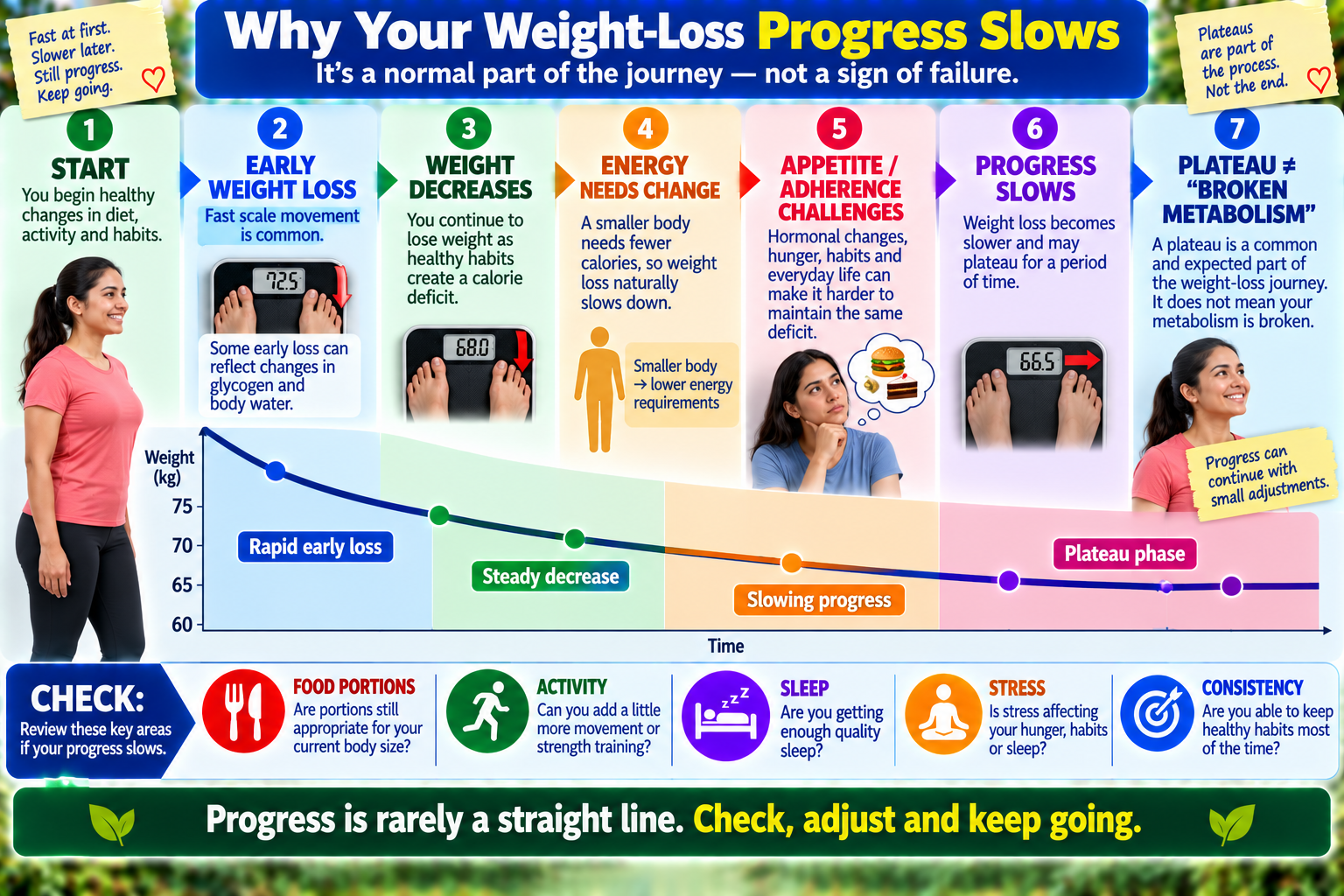
A plateau can feel frustrating.
You may think:
“My metabolism has stopped.”
That is usually too simplistic.
Several things can happen during weight loss.
Your Body Becomes Smaller
A smaller body generally requires less energy than a larger body.
Your Activity May Change
Some people unconsciously move less when eating less.
Portions May Creep Up
Small changes can accumulate.
Hunger May Increase
Restrictive diets can become increasingly difficult to maintain.
The Initial Water Loss Ends
Early weight loss can include changes in body water and glycogen, so the initial scale drop may be faster.
Your Energy Requirements Change
The amount of energy that supported weight loss earlier may eventually produce a smaller deficit.
This does not mean you have permanently damaged your metabolism.
It means weight management is dynamic.
“Healthy Food” Can Still Make Weight Loss Difficult
This is a particularly useful point for readers.
Foods can be nutritious and still provide substantial energy.
Examples include:
- Nuts
- Nut butters
- Seeds
- Oils
- Cheese
- Dried fruit
- Large smoothies
- Coconut-based sauces
- Large portions of whole grains
These foods do not need to be eliminated.
Portion awareness matters.
The Healthy-Food Magnifier
Ask:
“What did I add to this healthy meal?”
A vegetable bowl can become substantially more energy-dense with large amounts of oil, nuts, cheese, dressing, or creamy sauces.
This does not make those ingredients unhealthy.
It simply means nutritional quality and energy density are different concepts.
Can You Lose Weight Without Counting Calories?
Yes, some people can lose weight without tracking every calorie.
NIDDK recommends choosing a healthy eating plan that can be maintained and notes that monitoring food, activity, and weight can be useful components of structured weight-management programs. NIDDK: Safe and Successful Weight-Loss Programs
You might instead use:
- Portion awareness
- Meal structure
- Protein at meals
- More vegetables
- Fewer sugary drinks
- Regular activity
- Self-weighing when appropriate
- Food diaries
- Consistent meal patterns
Calorie tracking is a tool.
It is not a moral requirement.
What About Intermittent Fasting?
Time-restricted eating and intermittent fasting can be useful approaches for some people.
They are not magic metabolic switches.
A 2024 network meta-analysis of 47 randomized trials involving 3,363 participants compared several calorie-restriction approaches, including alternate-day fasting, short-term fasting, time-restricted eating, and continuous energy restriction. The evidence supports weight loss with several approaches, but it does not establish that one fasting strategy is universally best for everyone. Systematic review and network meta-analysis of caloric-restriction regimens
A 2026 systematic review examining time-restricted eating and diet quality also found that evidence about its effect on overall dietary quality remains limited. 2026 systematic review of time-restricted eating and diet quality
If fasting makes you constantly hungry, causes overeating later, or interferes with your life, it may not be the right strategy for you.
The 3-Day Sustainable Weight-Loss Meal Framework
This is not a rigid prescription.
It is an example of how to structure meals around protein, plants, and appropriate portions.
Day 1
Breakfast: Vegetable oats + yogurt
Lunch: Dal + mixed vegetables + roti
Snack: Fruit + roasted chana
Dinner: Grilled fish or tofu + vegetables + moderate rice portion
Day 2
Breakfast: Eggs or paneer/tofu + vegetables + whole-grain roti
Lunch: Rajma + vegetables + rice
Snack: Plain yogurt + fruit
Dinner: Chickpea salad/bowl + vegetables + whole grain
Day 3
Breakfast: Oats + fruit + nuts/seeds
Lunch: Chana dal + vegetable sabzi + roti
Snack: Fruit + curd
Dinner: Egg/tofu/paneer vegetable stir-fry + appropriate grain portion
Adjust portions according to your needs.
People with diabetes, kidney disease, gastrointestinal conditions, eating disorders, pregnancy, or other medical considerations may need individualized nutrition guidance.
Common Sustainable Weight-Loss Mistakes
Mistake 1: Chasing the Fastest Possible Weight Loss
Faster is not automatically better.
CDC notes that gradual, steady weight loss is more likely to remain off than very rapid weight loss. CDC: Steps for Losing Weight
Mistake 2: Cutting Out Entire Food Groups Without a Reason
You do not automatically need to eliminate carbohydrates, fats or another major food group.
Mistake 3: Ignoring Muscle
Diet-only weight loss can include lean-mass loss.
Resistance training can help protect fat-free mass during dietary weight loss. 2025 resistance-training meta-analysis
Mistake 4: Drinking Calories Without Noticing
Sugary drinks, sweetened coffee, alcohol, and large smoothies can contribute significant energy.
Mistake 5: Eating “Healthy” Foods Without Considering Portions
Nutrient density and energy density are not identical.
Mistake 6: Sacrificing Sleep for Exercise
More exercise does not necessarily compensate for chronic sleep deprivation.
Mistake 7: Starting Over Every Monday
A sustainable plan allows imperfect days.
Mistake 8: Treating the Scale as Your Only Measure
Consider strength, waist circumference, physical fitness, energy, sleep, and adherence alongside body weight.
People-First Insight: Design for Your Worst Day
Most weight-loss plans are designed for your best day.
- You have plenty of time.
- You cook everything.
- You exercise.
- You sleep early.
Real life does not always look like that.
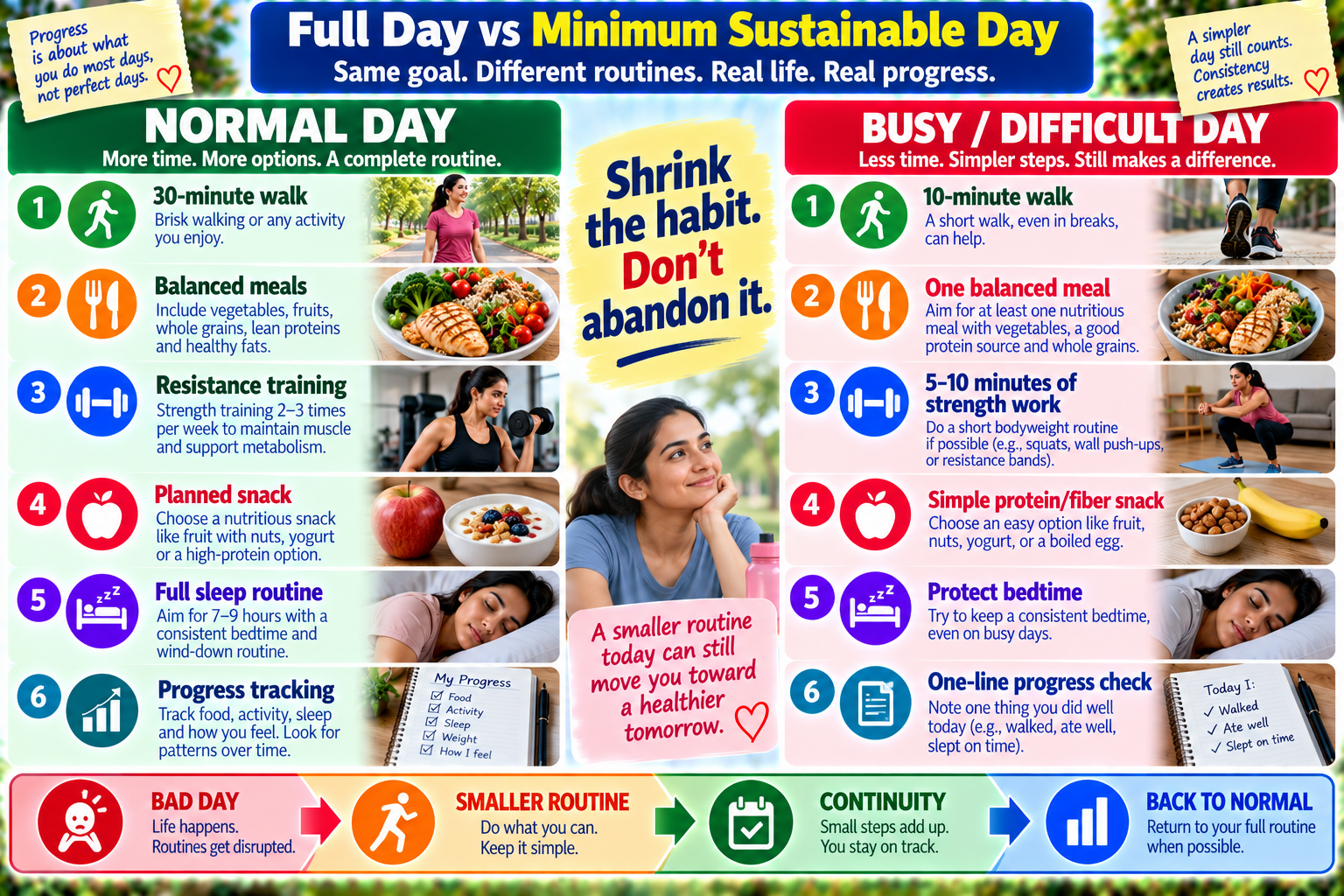
A better plan includes a minimum version.
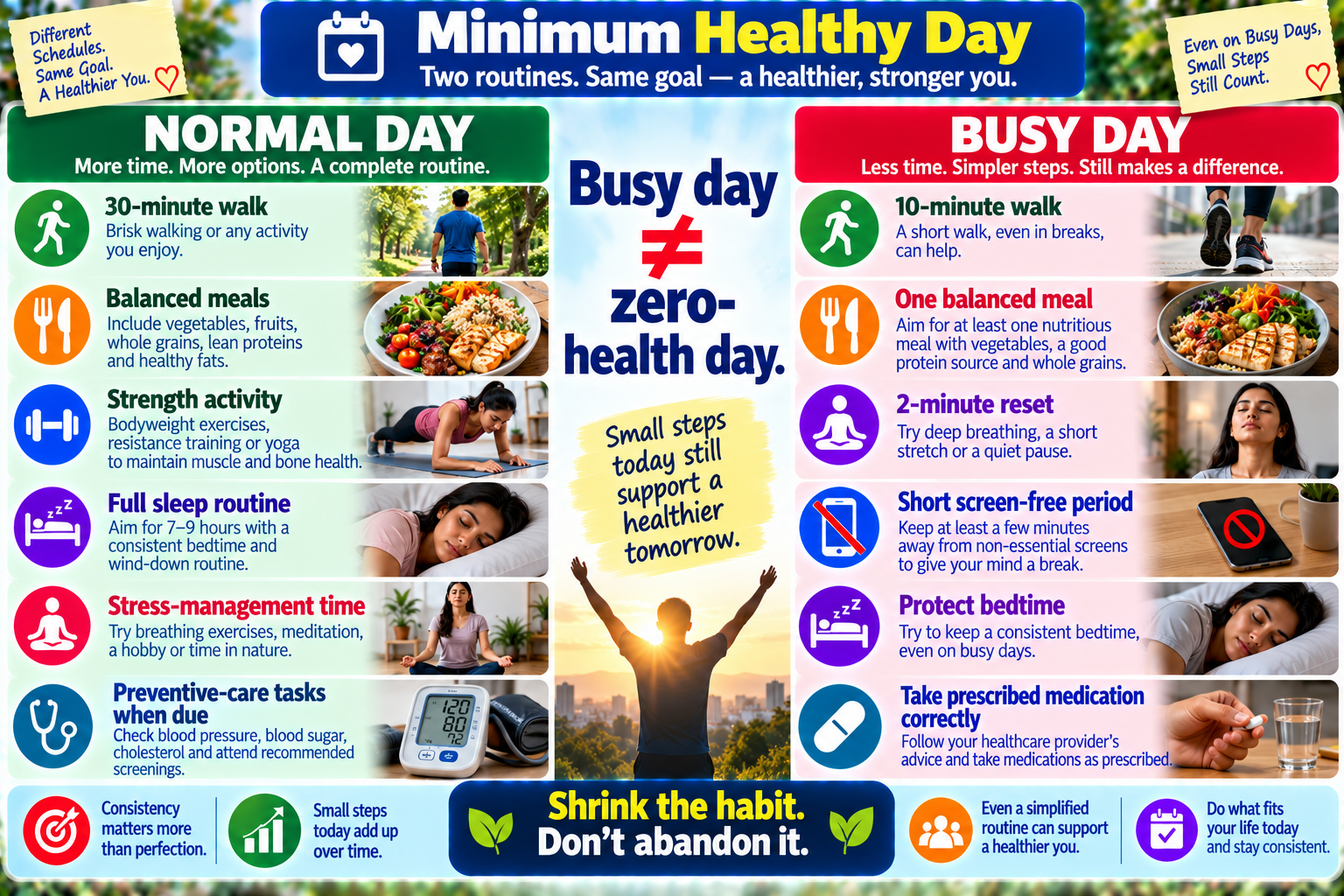
Your Minimum Sustainable Day
Movement: 10-minute walk.
Food: One balanced meal.
Protein: Include a protein source at least in your main meals.
Sleep: Protect bedtime.
Stress: Take two quiet minutes.
Tracking: Notice what went wrong without judging yourself.
This approach is not glamorous.
It is practical.
And long-term behavior depends heavily on whether you can continue the behavior.
The latest 2026 meta-analysis of behavioral interventions found goal setting, feedback, and self-monitoring among techniques associated with better weight outcomes. 2026 behavior-change meta-analysis
Latest Research Developments in Sustainable Weight Loss
1. Behavior Change Is Receiving More Attention
The newest research increasingly asks not only
“Which diet causes weight loss?”
but also:
“Which behaviors help people continue the plan?”
A September 2026 systematic review and meta-analysis analyzed 65 studies and approximately 10,000 participants. Goal setting, feedback, and self-monitoring were among the behavior-change techniques associated with better weight outcomes. However, the analysis did not find a statistically significant overall effect on weight maintenance after initial loss, showing that maintenance remains difficult and that no single behavior technique solves the problem. 2026 systematic review and meta-analysis
This is an important development.
It shifts the conversation away from “perfect diet” thinking.
2. Resistance Training Is Becoming More Important
A 2025 systematic review of 25 randomized controlled trials found that resistance exercise during dietary weight loss protected fat-free mass, increased fat loss, and improved strength. 2025 BMJ Open Sport & Exercise Medicine meta-analysis
That supports a more sophisticated goal:
Improve body composition, not simply reduce scale weight.
3. Protein and Muscle Preservation Are Closely Connected
The 2024 meta-analysis of 47 studies found that higher protein intake during weight loss significantly reduced the decline in muscle mass, although the evidence did not show a significant protective effect on muscle strength or physical function. Protein and muscle-preservation meta-analysis
This means protein deserves attention during weight loss, but it should be considered alongside resistance training, total diet quality, and individual health needs.
4. Sleep Is Being Studied as a Weight-Management Tool
The randomized sleep-extension trial showed that extending sleep among short-sleeping adults with higher weight reduced objectively measured energy intake. JAMA Internal Medicine sleep-extension trial
More recent research also shows that sleep interventions do not always improve every metabolic outcome. A 2026 randomized trial found that sleep extension improved sleep duration but did not improve insulin sensitivity in adults with higher weight or obesity who habitually slept too little. 2026 randomized trial of sleep extension and insulin sensitivity
That is a valuable example of why health articles should avoid claiming that one intervention “fixes metabolism.”
5. Obesity Is Increasingly Viewed as a Complex Chronic Disease
WHO describes obesity as a chronic, relapsing disease arising from complex interactions among genetics, neurobiology, eating behavior, access to healthy food, market forces, and the wider environment. WHO: Obesity and higher weight, December 2025
This matters because telling people to “just eat less and exercise more” leaves out important biological, psychological, and environmental factors.
For some people, lifestyle changes are sufficient.
For others, professional obesity treatment, medication, or metabolic/bariatric surgery may be appropriate. NIDDK recognizes lifestyle treatment, weight-loss medications, and bariatric surgery as possible components of obesity management depending on the individual. NIDDK: Treatment for higher weight and Obesity
When Weight Loss Is Not Responding
Sometimes a person is genuinely following a reasonable plan and still struggles to lose weight.
That deserves investigation rather than blame.
Possible contributors include:
- Medications
- Sleep disorders
- Endocrine conditions
- Menopause-related changes
- Mental health conditions
- Severe stress
- Reduced physical activity
- Eating-disorder patterns
- Genetic factors
- Environmental factors
NIDDK specifically notes that medications, health problems, sleep, genes, family history, and lifestyle can all influence weight. NIDDK: Factors Affecting Weight and Health
If you have obesity or significant weight-related health problems, medical treatment is not a failure.
It is healthcare.
Frequently Asked Questions
What is the best strategy for sustainable weight loss?
There is no single best strategy for everyone. A sustainable plan generally combines a manageable energy deficit, nutritious food, regular physical activity, muscle-preserving exercise, adequate sleep, and behavior strategies that help you continue the plan.
Can I lose weight without counting calories?
Yes. Some people successfully use portion awareness, meal structure, higher-fiber foods, protein-rich meals, regular movement, and self-monitoring instead of counting every calorie.
Does metabolism slow down during weight loss?
Energy requirements generally decrease as body weight decreases, and NIDDK notes that metabolism slows during weight loss. Hormonal and other changes can also make maintenance difficult. NIDDK
That does not mean your metabolism is permanently damaged.
How can I preserve muscle while losing weight?
Adequate protein and resistance exercise can help. A 2025 meta-analysis found that resistance exercise during dietary weight loss protected fat-free mass and improved fat loss compared with diet alone. PubMed
Is intermittent fasting necessary?
No.
Time-restricted eating and other fasting strategies can work for some people, but research does not establish one approach as universally superior. 2024 network meta-analysis
Does sleep really affect weight loss?
Sleep can influence eating behavior and energy intake. A randomized trial found that sleep extension reduced energy intake in adults with higher weight who habitually slept too little, although longer-term research is still needed. PubMed
Why did my weight loss stop?
Possible reasons include lower energy requirements after weight loss, changes in activity, increased portions, stress, sleep disruption, and normal fluctuations in body water.
A plateau does not automatically mean that your metabolism is broken.
How much weight should I lose?
That depends on your starting weight, health status, medical conditions, and goals.
NIDDK gives 5% of initial body weight over six months as an example of an initial goal that may be appropriate for some people, but individual goals should be discussed with a healthcare professional. NIDDK: Treatment for higher weight and Obesity
Can I maintain weight loss permanently?
Long-term maintenance is possible, but it requires continued attention to eating, activity, and other behaviors. Weight maintenance can be difficult because physiological and behavioral changes occur after weight loss. NIDDK: Weight Maintenance
A Simple Sustainable Weight-Loss Checklist
| Question | Your check |
|---|---|
| Is my calorie deficit manageable? | ☐ |
| Do my meals contain adequate protein? | ☐ |
| Do I eat vegetables, fruit, and fiber-rich foods regularly? | ☐ |
| Am I doing resistance exercise? | ☐ |
| Am I moving throughout the day? | ☐ |
| Am I protecting sleep? | ☐ |
| Do I have a plan for stress-related eating? | ☐ |
| Am I monitoring progress without obsessing? | ☐ |
| Can I continue this eating pattern for months? | ☐ |
| Do I already have a maintenance plan? | ☐ |
If several boxes remain unchecked, do not change everything simultaneously.
Choose one.
Personal Experience
My experience with healthy routines has taught me that complicated weight-loss plans are difficult to maintain.
A plan can look impressive on paper but become exhausting when work, family responsibilities, and unexpected events appear.
I have found it more practical to focus on small behaviors that can fit into an ordinary day.
A short walk can be easier to maintain when time is limited, while a familiar meal becomes more sustainable when you add vegetables and an appropriate protein source.
Protecting bedtime can also be more realistic than trying to compensate for poor sleep with another supplement or extreme workout.
These observations are personal experience, not medical evidence.
The research should determine what we claim about weight loss; personal experience can help explain how a person might make those evidence-based behaviors easier to maintain.
Author Note
This article focuses on sustainable weight management rather than rapid weight-loss promises.
Weight is influenced by biological, behavioral, environmental, and social factors, and different people may require different approaches.
The purpose is to give readers practical strategies that can be adapted to ordinary life while distinguishing established evidence from popular metabolism myths.
Medical Disclaimer
This article is for general educational purposes and is not a substitute for medical diagnosis, treatment, or individualized nutritional advice.
If you have obesity, diabetes, kidney disease, heart disease, an eating disorder, pregnancy, a history of bariatric surgery, or another medical condition, discuss weight-loss strategies with an appropriately qualified healthcare professional.
Do not stop prescribed medication because of information in this article.
Some medications and medical conditions can affect appetite, metabolism, and weight. NIDDK specifically recommends discussing weight and possible treatment options with a healthcare professional when appropriate. NIDDK: Safe and Successful Weight-Loss Programs
Fitness Disclaimer
Exercise should match your health, age, physical ability, and training experience.
If you have been inactive, start gradually rather than immediately attempting intense workouts.
People with cardiovascular disease, uncontrolled blood pressure, significant joint problems, or other medical conditions should obtain appropriate professional guidance before beginning vigorous exercise.
Stop exercising and seek medical attention for concerning symptoms such as severe chest pain, fainting, or unusual shortness of breath.
Research Methodology
This article prioritizes evidence from NIDDK, CDC, WHO, and peer-reviewed systematic reviews, meta-analyses, and randomized controlled trials.
Particular attention was given to recent 2025–2026 evidence on behavior-change strategies, resistance training, protein intake, sleep, weight-loss maintenance, and obesity management.
Where research is mixed or limited, the article avoids presenting a single study as definitive proof.
Personal experience is clearly separated from scientific evidence.
The article also avoids claiming that one diet, supplement, exercise, or metabolic intervention works universally for everyone.
Sources
- NIDDK — Eating and Physical Activity to Lose or Maintain Weight
- NIDDK—Treatment for higher weight and Obesity
- NIDDK — Choosing a Safe & Successful Weight-Loss Program
- CDC — Steps for Losing Weight
- WHO—Healthy Diet
- WHO—Obesity and higher weight, December 2025
- 2026 systematic review and meta-analysis of behavior-change techniques
- 2025 resistance-exercise systematic review and meta-analysis
- Protein intake and muscle preservation systematic review and meta-analysis
- 2025 weight-loss maintenance systematic review and meta-analysis
- Sleep-extension randomized clinical trial
- 2025 review of dietary and behavioral strategies for weight loss and maintenance
Final Thoughts
Sustainable weight loss is not about finding a secret switch inside your metabolism.
Your body is more complicated than that.
Weight management reflects the interaction of food intake, physical activity, body composition, appetite, sleep, stress, medications, medical conditions, genetics, and environment. NIDDK: Factors Affecting Weight and Health
The most useful approach is therefore not the most extreme one.
Create a manageable energy deficit.
Choose foods that keep meals nutritious and satisfying.
Include enough protein.
Protect muscle with resistance exercise.
Move throughout the day.
Protect your sleep.
Build strategies for stress.
Monitor your progress without becoming obsessed with one number.
Most importantly, think about maintenance before you reach your goal.
Recent evidence supports this broader approach. Behavioral strategies such as goal setting, feedback, and self-monitoring can contribute to better weight outcomes, while resistance training can help preserve lean mass during dietary weight loss. 2026 behavior-change meta-analysis 2025 resistance-training meta-analysis
There is no requirement to make your weight-loss journey perfect.
You need a system that can survive ordinary life.
- A busy day.
- A family meal.
- A holiday.
- A poor night’s sleep.
- A week when motivation disappears.
- A temporary plateau.
That is the real meaning of sustainable weight loss strategies.
The goal is not simply to lose weight.
It is to build a healthier routine that you can continue after the number on the scale has changed.
Related Articles
- Home
- Weight Loss Category
- 4 Week Diet Plan for Weight Loss
- 222 Method Metabolism For Weight Loss
- 13 Best Ways To Boost Metabolism With Exercise
- The Nutritional Secrets of Superfoods
Post Views: 1,596









[…] 8 Metabolic Mastery: Unlocking the Secrets to Sustainable Weight Loss […]